Quick answer: 1 cup of flour is about 125 g, but 1 cup of sugar is about 200 g. A cup is a unit of volume, a gram is a unit of mass, so the answer depends on the ingredient. That is the trick most charts skip. Our per-ingredient weights follow King Arthur Baking’s ingredient chart, the baker’s reference.
The ingredient chart
| Ingredient | 1 US cup (240 ml) |
|---|---|
| All-purpose flour | 125 g |
| Granulated sugar | 200 g |
| Brown sugar, packed | 220 g |
| Icing sugar | 120 g |
| Butter | 227 g |
| Cocoa powder | 100 g |
| Rolled oats | 90 g |
| Rice, uncooked | 185 g |
| Honey | 340 g |
| Milk or water | 240 g |
Spoons follow the same logic: 1 tablespoon is 15 ml, 1 teaspoon is 5 ml, and a US stick of butter is 113 g, exactly half a cup.
Why one number can’t work
Density changes everything. Flour is full of air, honey is not: the same cup holds 125 g of one and 340 g of the other. A single “cups to grams” figure is wrong for almost every ingredient, which is exactly the kind of thing the app handles for you across 46 categories of units.
Two extra pitfalls: how you fill the cup matters (a packed cup of flour can weigh 150 g), and a UK cup or an Australian cup is not the exact same volume as a US cup. When precision matters, bakers weigh.
Which weighs more: a cup of flour or a cup of sugar?
A cup of sugar is about 200 g against 125 g for flour: density decides, not the cup.
The app answers this kind of question in one tap.
Do it in one tap
Instead of memorising a table, type the amount straight into the field and read grams, ounces and millilitres at once. Cooking is one of the most common moments people reach for the app, and you can see more of them in our everyday use cases. While the cake is in the oven, the same recipe probably gave you a temperature in Fahrenheit too. And when the recipe names a pan you do not own, the baking pan size chart tells you which one holds the same batter.
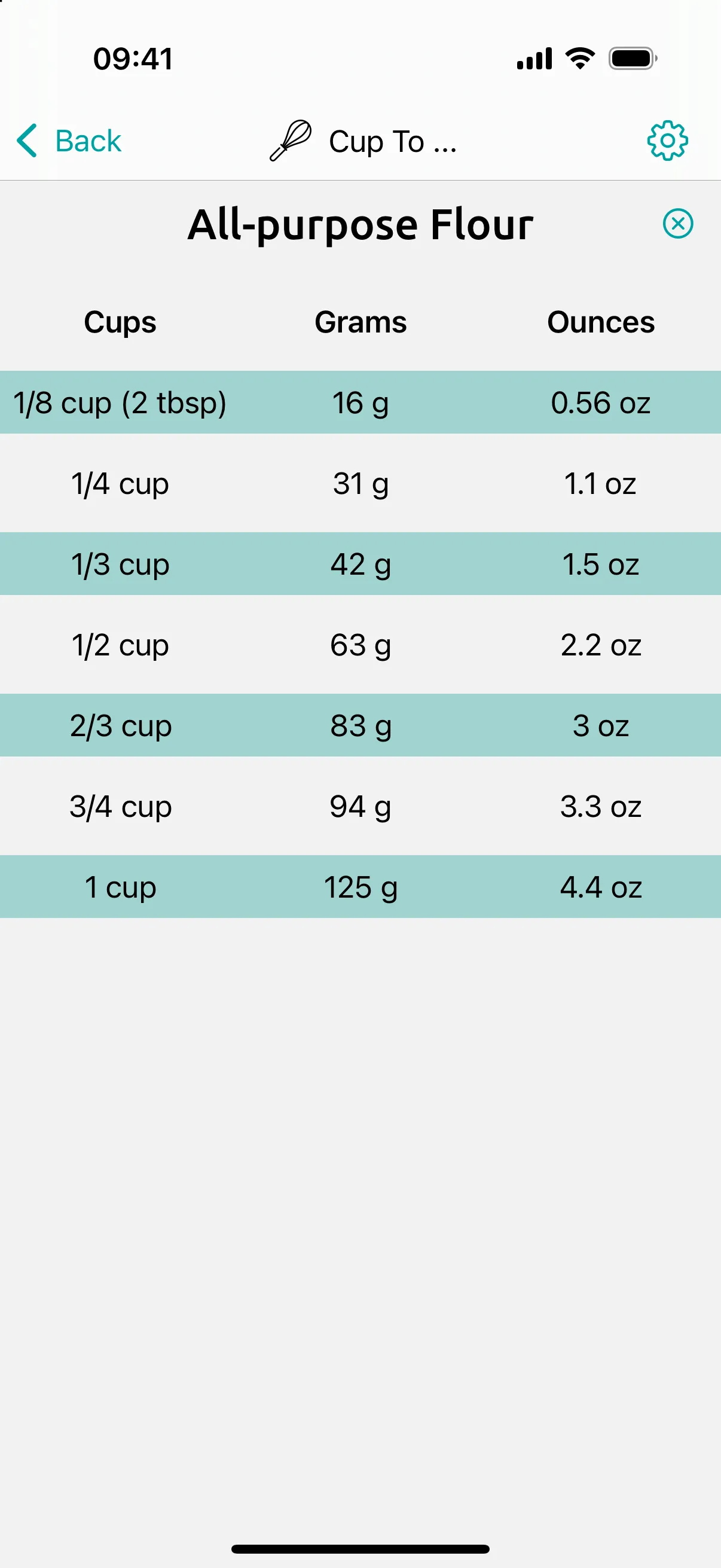
It works with no signal in the kitchen, so a spotty connection never stops dinner. Ready to try it? Download it for free and convert your next recipe in seconds.