Quick answer: 350°F is about 177°C, which ovens round to 180°C. That is gas mark 4, or 160°C in a fan oven.
An American recipe says 350°F, your oven dial says Celsius, your gran’s recipe book says gas mark 4, and a French cookbook says thermostat 6. Four systems, one cake. This page puts all of them in a single table; no other chart we know of covers all five scales side by side.
Download the chart as a printable PDF: one A4 page to stick on the fridge.
The complete oven temperature chart
| °F | °C conventional | °C fan | Gas mark | Thermostat (FR) | Typical use |
|---|---|---|---|---|---|
| 225°F | 110°C | 90°C | 1/4 | 3-4 | Meringues, drying |
| 250°F | 120°C | 100°C | 1/2 | 4 | Slow roasting |
| 275°F | 140°C | 120°C | 1 | 4-5 | Low and slow |
| 300°F | 150°C | 130°C | 2 | 5 | Rich fruit cakes |
| 325°F | 160°C | 140°C | 3 | 5-6 | Gentle baking |
| 350°F | 180°C | 160°C | 4 | 6 | Cakes, cookies, most baking |
| 375°F | 190°C | 170°C | 5 | 6-7 | Biscuits, pies |
| 400°F | 200°C | 180°C | 6 | 7 | Roasting, bread |
| 425°F | 220°C | 200°C | 7 | 7-8 | Pizza, puff pastry |
| 450°F | 230°C | 210°C | 8 | 8 | Very hot roasting |
| 475°F | 240°C | 220°C | 9 | 8 | Hottest gas setting |
| 500°F | 260°C | 240°C | - | 9 | Max heat, pizza stone |
Feel free to reuse this chart or the PDF on your own blog or in your recipes; a link back to this page is all we ask.
The three rules behind the chart
Fahrenheit to Celsius: subtract 32, then multiply by 5/9 (the official conversion formula, per NIST). So 350°F gives (350 - 32) × 5/9 = 176.7°C. Recipes round to 180°C because oven dials do too.
The fan rule: a fan oven circulates heat, so it cooks hotter than its dial says. Reduce the conventional temperature by about 20°C (or 25°F), the same offset Which? uses in its UK reference table. Recipes are written for conventional ovens unless they say otherwise, so a recipe’s 180°C means roughly 160°C fan. Most baking failures with “correct” temperatures come from skipping this rule.
The French thermostat: thermostat = °C ÷ 30. Thermostat 6 is 180°C; it climbs in 30°C steps.
Fan or conventional: which one should you use?
The chart converts the numbers, but the real question is usually which mode to pick. The short version:
- Cakes and sponges: conventional. The still air lets them rise evenly without drying the edges or cracking the top.
- Cookies or anything on several trays: fan. That is what the fan is for; every tray gets the same heat.
- Roasts and vegetables: fan. Moving air browns and crisps far better.
- Bread: conventional, with a small dish of water in the bottom for the crust.
- Pizza: conventional at maximum temperature, stone or tray low in the oven. The fan dries the toppings before the base is done.
On American ovens, “bake” is conventional and “convection” is the fan; the same 20°C (25°F) rule applies.
Fast answers
- Gas mark 4 in a fan oven: about 160°C.
- Gas mark 5 in a fan oven: about 170°C.
- Gas mark 6 in a fan oven: about 180°C.
- 350°F in a fan oven: about 160°C.
- 180°C fan in conventional: about 200°C, or 400°F.
A recipe says gas mark 4. What is that in Celsius?
Gas mark 4 is 350°F, which is about 180°C conventional (160°C fan).
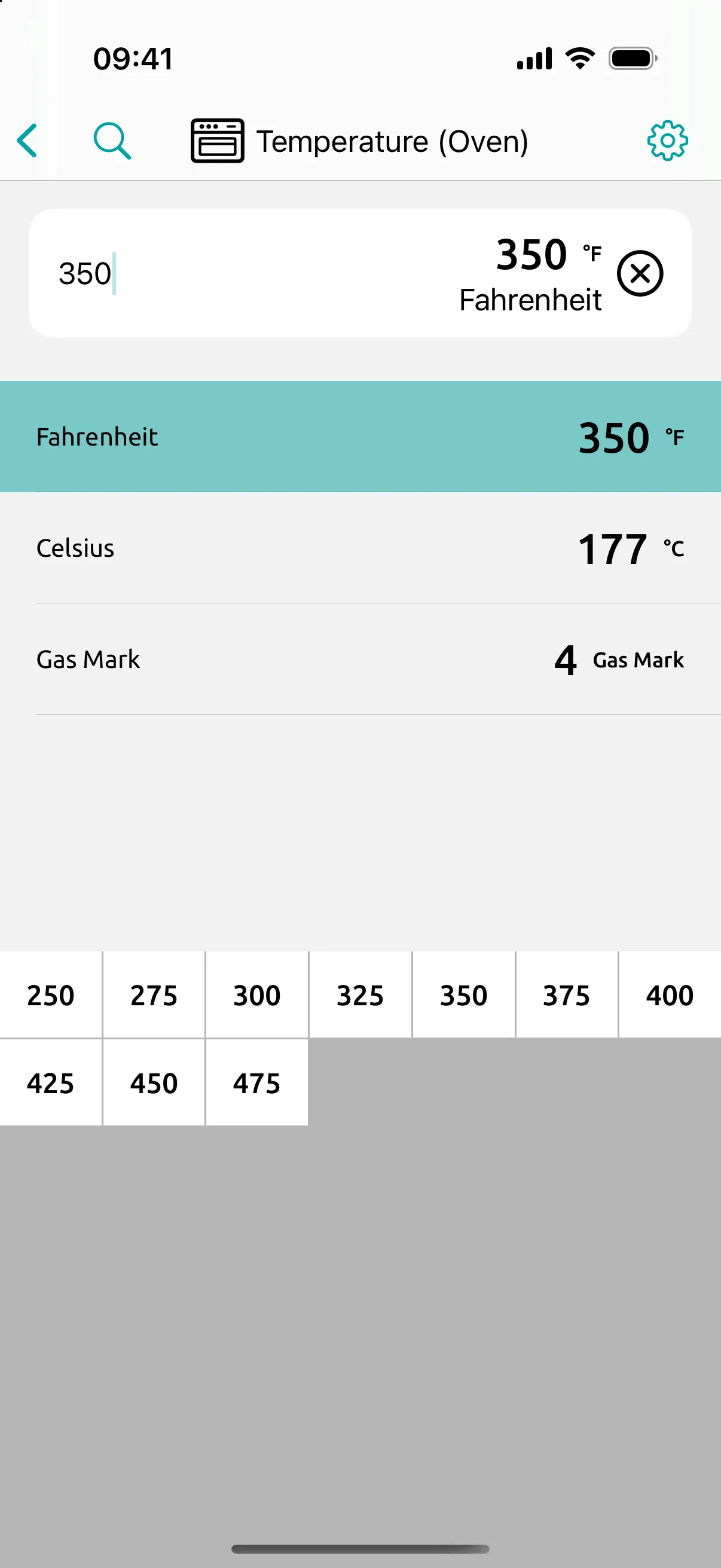
The app answers this kind of question in one tap.
Faster than scrolling back to this chart
Mid-recipe, hands covered in flour, you do not want to hunt for a table. Type the temperature once in Conversion Calculator and read Fahrenheit, Celsius and every other scale at the same time, even with no signal in the kitchen. The temperature converter is one of the everyday scenes the app was built around, next to cups and grams for the same recipe. The pan is the other half of the question, and the baking pan size chart covers that one.
Get the app free and stop translating your oven. And if the printed chart earns a spot on your fridge, the PDF is here.